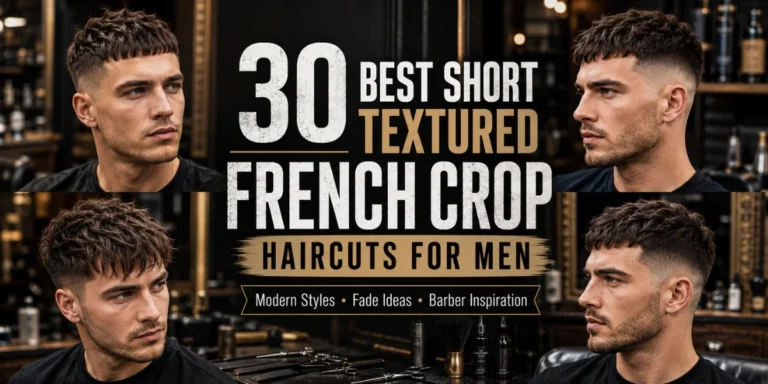
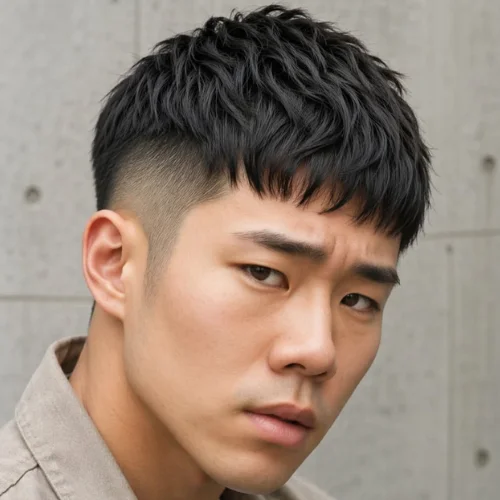
Asian French Crop: 8 Styles That Work With Thick, Straight Hair
If you have thick, straight Asian hair, you already know the problem with most haircut photos: they were cut on hair that behaves completely differently from yours. Copy one exactly and you can end up with a stiff, helmet-shaped fringe or sides that puff out a week later.
The good news is that the French crop is one of the best cuts for Asian hair, as long as it is cut with that hair in mind. Below are eight versions that work, what to tell your barber, and how to style it so it sits right every day.
Why the French Crop Suits Asian Hair
Asian hair tends to be thick, straight and strong, and it often grows outward or straight up rather than lying flat. A French crop works with that instead of fighting it. The short sides control the width, and the cropped top gives all that density somewhere to go.
Where it goes wrong is weight. Thick, straight hair cut bluntly sits as one solid block. That is where the “bowl” or helmet look comes from. The fix is texture: your barber needs to break up the top so the strands separate and move.
8 Asian French Crop Styles to Try
1. Textured Asian French Crop With a Low Taper
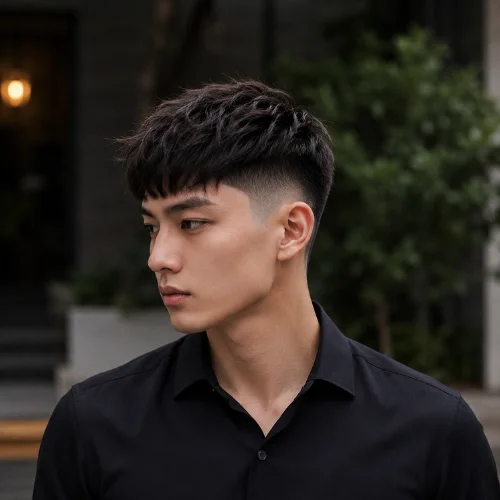
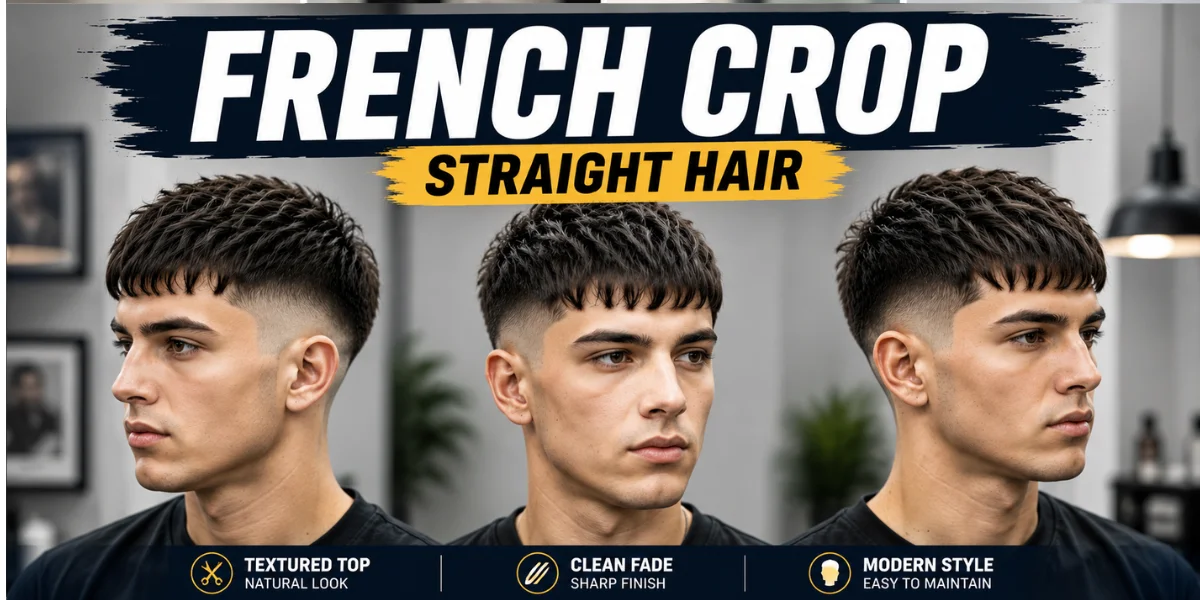
This is the safest starting point. The top is point-cut so it falls into separate pieces, and the sides taper gently near the ears and neckline instead of fading to skin. It looks clean at work and does not need much styling. If you are unsure, ask for this one. See more versions in our French crop low taper guide.
2. Korean-Style Soft Fringe Crop
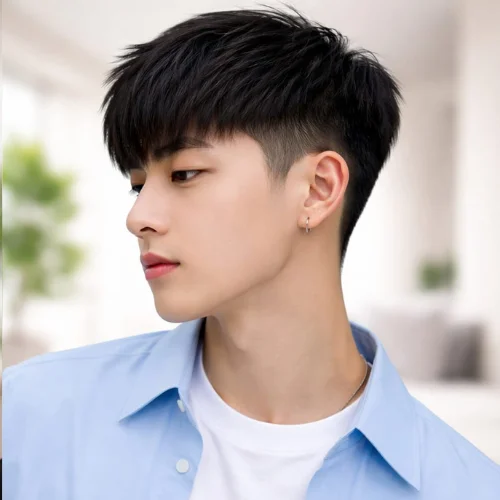
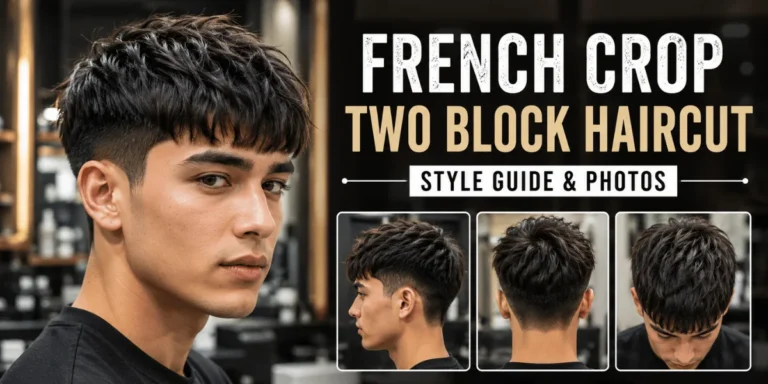
Popular across East and Southeast Asia, this version keeps the fringe a little longer and softer, often with the sides cut short but not faded. It sits close to the two block French crop, which suits hair that sticks out at the sides. Ask for the fringe to be cut slightly uneven so it looks natural rather than straight across.
3. Asian French Crop With a Mid Fade
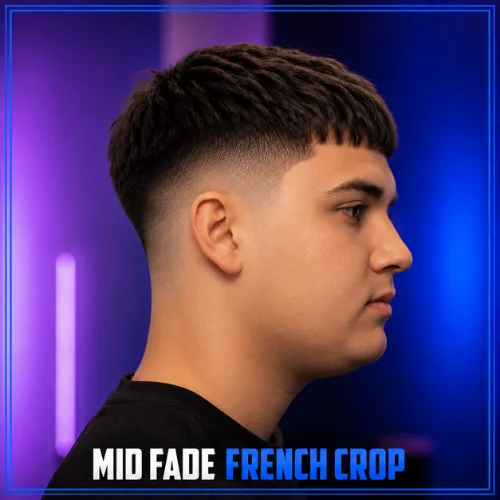
The mid fade starts around the temple and gives a sharper outline than a taper. It is a strong choice if your hair grows out wide at the sides, because it removes that bulk completely. Expect to need a touch-up every two to three weeks to keep the fade crisp. More examples are in our French crop mid fade guide.
4. Skin Fade French Crop
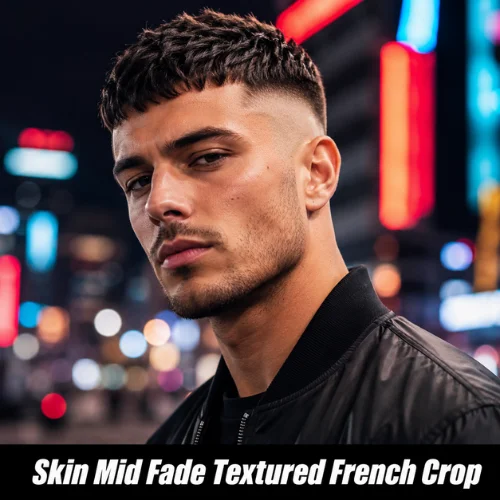
The highest-contrast version: sides taken down to the skin, with a dense textured top. On thick dark hair the contrast is striking. It is also the most work to maintain, so choose it if you are happy to visit the barber often.
5. Messy Choppy Crop
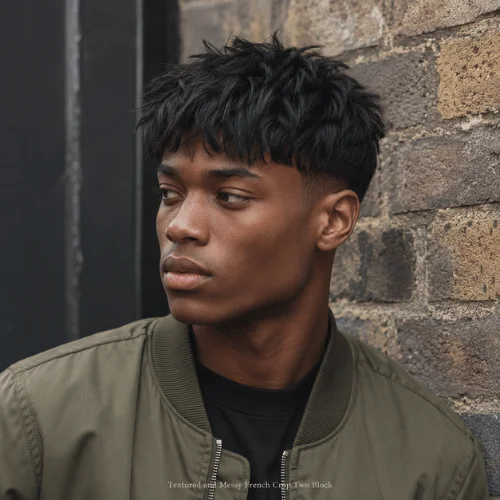
Here the top is cut with deep texture and styled loosely with your fingers. It is ideal if your hair has a cowlick or a crown that stands up, because the messy finish hides it instead of fighting it. Our messy French crop guide has more styling ideas.
6. Short Crop for Hot Weather
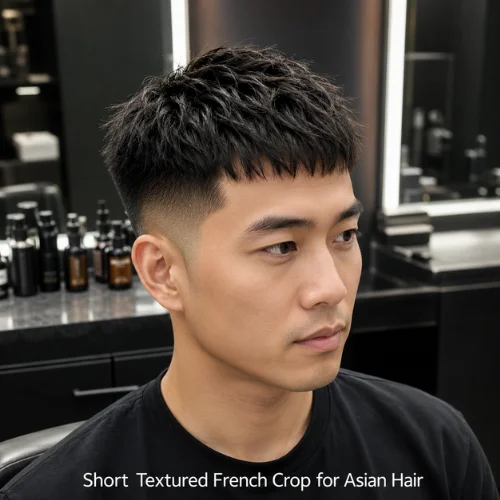
A shorter top, around two to three centimetres, with a low fade. It dries fast, stays tidy in heat and humidity, and needs almost no product. A practical choice for hot climates and busy mornings.
7. Grown-Out Fringe Crop

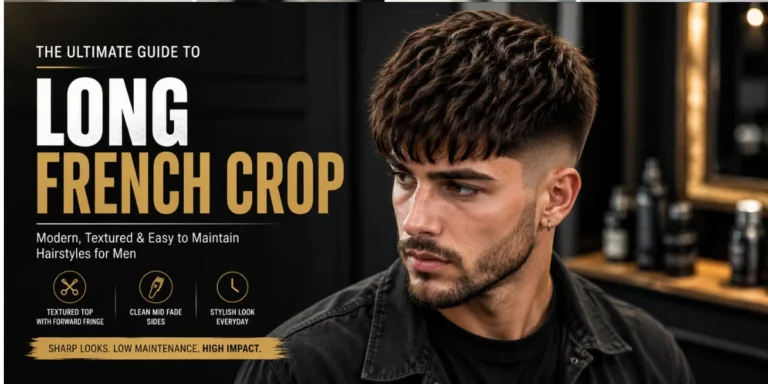
If you prefer more length, the top can be left longer and the fringe brought down past the eyebrows, then textured heavily so it does not hang flat. It works best on hair that is thick but not coarse. See the long French crop guide for longer variations.
8. Textured Crop With a Burst Fade
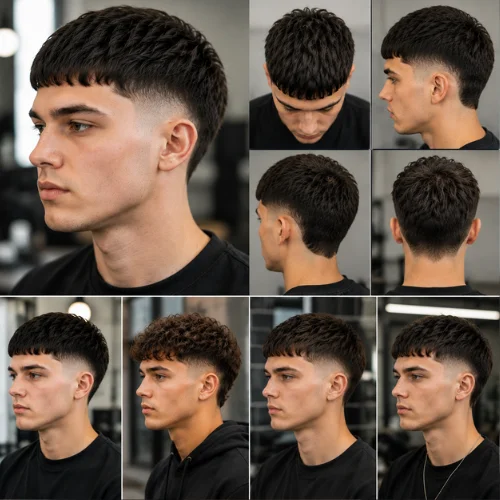
The burst fade curves around the ear and leaves a little more length at the back of the neck. It adds an edgier shape without the full commitment of a skin fade, and it pairs well with a choppy top. More on this in our French crop burst fade guide.
What to Tell Your Barber
Thick, straight hair needs slightly different instructions from the ones in most haircut guides. Bring a photo, then cover these points:
- Ask for texture, not just thinning. Point cutting or texturising scissors on top will make the hair separate. Thinning shears alone can leave short hairs that push the rest up.
- Ask to remove weight from the inside. This stops the top from sitting as one heavy block.
- Keep the fringe a little longer than you think. Straight hair that is cut too short at the front tends to stand up instead of falling forward.
- Name the fade height. Low taper for something subtle, mid fade for a sharper outline, skin fade for maximum contrast.
- Mention any cowlick or crown. A good barber will leave a little extra length there so it lies down.
How to Style an Asian French Crop
Thick, straight hair has a mind of its own, so a little routine goes a long way:
- Start with damp hair. Towel dry so it is damp, not wet.
- Blow dry forward and down. Use low heat and point the dryer from the crown towards the fringe. This trains the hair to sit forward instead of standing up.
- Use a matte product. A small amount of matte clay or paste gives grip without shine. Heavy gel makes thick hair look stiff and wet.
- Add sea salt spray for flat days. A few sprays before drying gives extra texture and volume.
- Finish with your fingers. Twist a few pieces at the front for separation.
For a full step-by-step routine, read our guide on how to style a French crop.
How Often to Get It Trimmed
Thick hair grows out wide, so the sides lose their shape quickly. Plan on a trim every three to four weeks, or every two to three weeks if you have a skin fade. The top can usually go longer between cuts than the sides.
Common Mistakes to Avoid
- Copying a photo cut on fine or wavy hair without telling your barber your hair is thick and straight.
- Cutting the fringe too short and straight, which creates the helmet look.
- Using wet-look gel, which clumps thick hair together.
- Letting the sides grow out too long before a trim, which makes the head look wider.
Find Your Version
The Asian French crop is less about one exact cut and more about getting the texture right for your hair. Start with a textured crop and a low taper, then adjust the fade and fringe once you see how your hair behaves. For every other variation, browse the complete French crop haircut guide.